
An article from 
Dive Brief
The draft policy comes after Florida Gov. Ron DeSantis directed the state’s public university system to end what he described as “H-1B abuse.”
Published Jan. 22, 2026

This audio is auto-generated. Please let us know if you have feedback.
The H-1B visa program is intended to allow U.S. employers to hire highly educated foreign workers for specialized positions, such as software development or research. Many high-profile universities, including those in Florida, rely on the program to hire researchers.
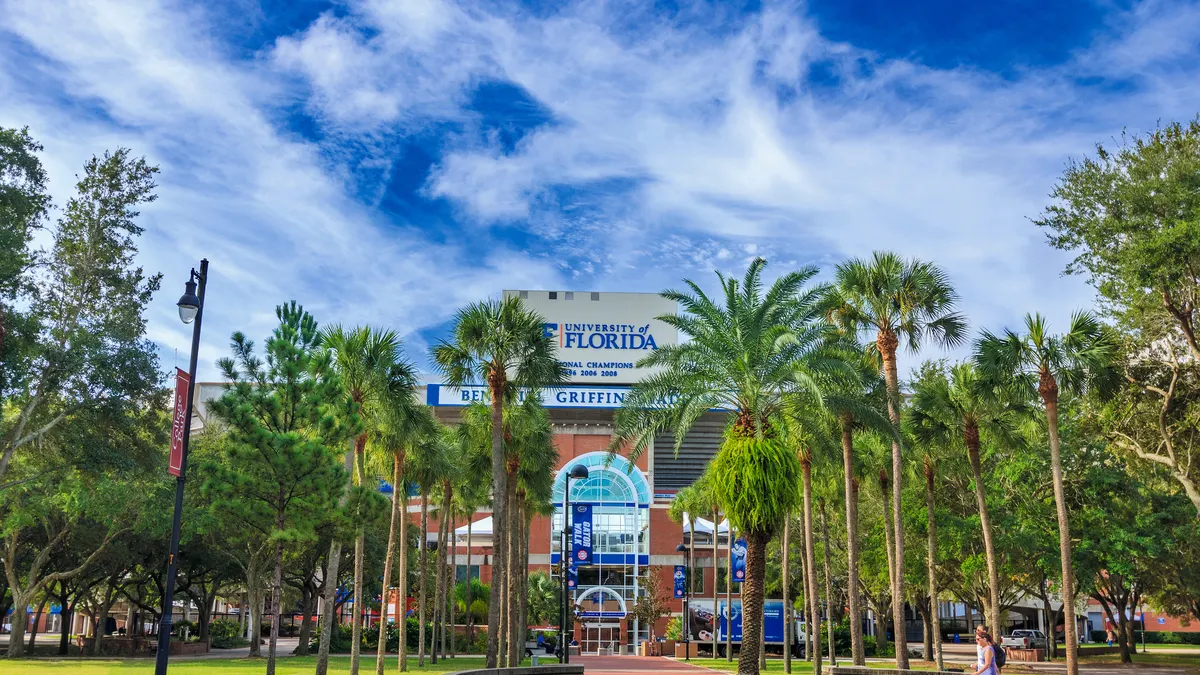
The University of Florida, the state’s flagship, employed 253 workers through the H-1B visa program in fiscal 2025, according to federal data. Statewide, it was followed by Florida State University, with 110 H-1B workers, and the University of South Florida, with 107.
Officials from those universities did not immediately respond to Higher Ed Dive’s request for comment on the policy proposal.
In October, DeSantis directed the state’s university system during a press conference to “pull the plug on the use of these H-1B visas in our universities.” With the new proposed policy, the governing board would carry that out through a roughly one-year pause on H-1B hiring.
DeSantis’ views on the H-1B program are in line with the Trump administration’s. In September, President Donald Trump issued a proclamation creating a $100,000 fee on new applications for H-1B visas, setting off alarms in the higher education world and other sectors that rely on these workers.
Nearly three dozen higher education groups have asked U.S. Homeland Security Secretary Kristi Noem for a sectorwide exemption to the fee.
In an October letter to Noem, American Council on Education President Ted Mitchell argued that carving out an exemption for higher ed would be similar to the sector’s current exemption from the nationwide annual cap on new H-1B awards, set at 85,000 per year.
The $100,000 policy has also drawn several lawsuits. However, a federal judge sided with the federal government last month on one of those legal challenges, ruling that Trump did not exceed his authority by issuing the proclamation.
The groups who sued, the U.S. Chamber of Commerce and the Association of American Universities, appealed the ruling on Dec. 29.